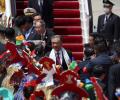
Wang Yang and Xi Jinping's visits signal the beginning of a major Chinese push to bring about a transformation of Tibet, observes Jayadeva Ranade, the distinguished China expert and retired RA&W officer.

Statements emanating from the recent Chinese Communist party congress suggest potentially increasing pressure on India with regard to the Dalai Lama and the Central Tibetan Administration in Dharamsala, notes former RAW officer Jayadeva Ranade.

A visit to Tibet appears to have become the new touchstone for expressing fealty to Xi Jinping, observes Jayadeva Ranade, the retired senior RA&W officer and distinguished China expert.

After the Ladakh fiasco where Xi Jinping did not expect the Indian Army to resist his land-grabbing tactics, he has to save face before his colleagues in the Communist party.' To bring the threat of a mega-dam to the northern Indian border is a clever move, observes Claude Arpi.

'Information about the Dalai Lama's heath is normally not shared with the public. Its release on this occasion implicitly underscores the message that the window of opportunity for Beijing to recommence the dialogue with the Dalai Lama -- an advocate of non-violence -- to resolve the contentious Tibetan issue is limited.' says Jayadeva Ranade.

'He still has to deal with party norms and traditions and has been careful to follow the order of seniority,' points out Claude Arpi.

Important for India was Xi's meeting with representatives of PLA officers and soldiers stationed in Tibet. The video of the encounter was interesting to watch, especially the large number of lieutenant generals and major generals, observes Claude Arpi.

'Why did your generals try to grab a few square kilometres of Indian territory in Ladakh?' 'And what happened to the hard work that you and Prime Minister Modi put into the Wuhan and Mamallapuram meets?' Claude Arpi writes a letter to Xi Jinping, China's self-styled supreme leader, who turns 68 today, June 15.
